


Heat correctly and save on heating costs efficiently instead of paying extra.
Why proper heating is crucial
Heating is usually the biggest energy consumer in a household. Every kilowatt-hour you don't need saves you money, protects the environment, and preserves the structure of your house or apartment.
Keep heating costs under control: How to find the perfect room temperature and humidity at home
Proper heating doesn't mean "always nice and warm," but rather heating precisely where you need it, and only as much as necessary .
This includes:
- appropriate temperature for each room instead of "23 degrees everywhere"
- Consistent temperature levels instead of strong fluctuations
- coordinated interplay of heating, ventilation and insulation
Energy, heating costs and climate in balance
What one degree more or less really means
A very important rule of thumb:
Every degree less room temperature saves around 6% heating energy.
This sounds abstract, but it has a great impact:
- For example, if you reduce the temperature in the living room from 22°C to 20°C, there is already a potential saving of about 12%.
- Extrapolated over the entire heating season, this can mean savings of several hundred francs – depending on the building and heating system.
- Important: This isn't about sitting on the sofa in your ski suit in winter. Even just wearing a warm sweater instead of a t-shirt gives you some leeway to turn down the heating a bit and save energy.
When you should start heating. Year of construction and building condition.
Orientation according to building standards
Not every building behaves the same. Whether you live in an older building or a modern, energy-efficient house makes a huge difference in heat loss. As a rule of thumb, you can use the following guidelines:
- Old building (pre-1977) : approx. 15–17 °C outside temperature
- Year of construction 1977–1995 : approx. 14–16 °C
- New building (from around 1995) : approx. 12–15 °C
- Minergie/low-energy house : approx. 11–14 °C
- Passive house : approx. 9–11 °C
These values tell you: From what outside temperature is it generally worthwhile to activate the heating so that the interior of the building does not cool down too much?
The better insulated your house is, the later you need to turn on the heating – because the building envelope retains heat longer, optimizing energy consumption and air quality.
Why your personal feelings still count:
- The guidelines are for orientation, not law. The decisive factors are:
- Your individual perception of cold
- Health aspects (e.g., in young children or elderly people)
- Use of the rooms (home office, rarely used guest room, etc.)
It is important that you make a conscious decision :
Are you heating because it's really too cold? Or because "it's always been that way"?
The ideal room temperature. Room by room.
Not every room needs to be the same temperature. On the contrary: a differentiated approach is professional – and saves energy.
The recommended guidelines:
- Living room, kitchen : approx. 20 °C
- Bedroom, hallway : 17–18 °C
- Bathroom : approx. 22 °C
- Children's room : 20–21 °C
Living room & kitchen: 20 °C as a comfort standard
You spend most of your waking hours in the living room. Most people find around 20°C comfortable.
Professional tips:
- Better to have a constant temperature of 20–21 °C than 17 °C during the day and "full load" in the evening.
- Combine heating with textiles: Carpets, curtains and cushions provide a subjective feeling of more warmth because they reduce drafts.
Bedroom & hallway: 17–18 °C is usually sufficient:
- In the bedroom, 17–18 °C is often ideal: you sleep better, and the air is not so dry.
- Similar temperatures prevail in the hallway, as you rarely spend much time there. This helps to concentrate energy in the common areas .
Bathroom: 22°C for moments of well-being:
- Comfort is particularly important in the bathroom. A temperature of around 22°C is ideal when showering or after bathing.
Professional tip:
- Use time-controlled heaters or radiator thermostats that only heat the bathroom during peak usage times.
- Make sure to ventilate the bathroom well after showering – get the moisture out, keep the warmth in as much as possible.
Children's room: 20–21 °C for sensitive residents:
- Children are more sensitive to cold. Therefore, a temperature of 20–21 °C is recommended in children's rooms.
- At the same time, good ventilation is crucial to reduce CO₂ and humidity – especially when the room is used for playing and sleeping.
Home office & rarely used rooms:
When working from home, the rule is: comfortably focused, but not overheated . Around 20°C is usually sufficient, combined with:
- good lighting
- warm socks or slippers
- Perhaps a thin blanket over your legs if you sit a lot.
Less frequently used rooms (storage room, guest room) can be kept at 16–17 °C – it is important that the rooms do not cool down completely in order to avoid moisture damage and mold and to keep energy costs under control.
Common heating mistakes – and how to avoid them
In practice, you see the same patterns time and again. The good news is: if you know these errors, you can easily correct them. The most important ones are already clearly identified in the original document:
Permanently tilted windows
Mistake: Leaving windows tilted open for hours "to let in fresh air".
Problem: Tilted windows provide hardly any air exchange , but allow heat to escape continuously .
- Better: Ventilate by opening windows wide for short periods.
- Open all windows fully for a few minutes several times a day.
- Turn down the radiators briefly beforehand.
- Close again after 5-10 minutes.
- This way you completely exchange the air without significantly cooling the building structure.
Turn the heating completely off and then on again
Mistake: "When I'm away during the day, I turn the heating off completely – that certainly saves the most energy."
Problem: The rooms cool down significantly. In the evenings, the heating system has to work much harder to bring the temperature back up.
The recommendation:
-
Consistently low temperature instead of extreme fluctuations. For example, 18–19 °C during the day, 20–21 °C in the living room in the evening.
Block radiators
Mistake: Sofa, chest of drawers or heavy curtains directly in front of the radiator.
The result: The heat gets trapped behind the piece of furniture. You increase the thermostat setting, but the room doesn't get any warmer.
Professional rule: There should be at least a hand's width of space in front of the radiator.
Long curtains: hang them so that they don't completely cover the radiator. This allows the warm air to circulate freely throughout the room.
Leave blinds and curtains open at night
Mistake: Blinds always up, curtains always open – even at night.
Problem: Especially with older windows, a lot of heat is lost through the glass surfaces. Cold panes increase the feeling of drafts in the room.
Solution: Close blinds and curtains in the evening . You create a simple but effective additional layer of insulation.
Proper ventilation in winter – without wasting heating energy
Heating and ventilation go hand in hand. Incorrect ventilation (e.g., leaving windows permanently tilted) can:
- wasting energy
- Promotes mold growth
- significantly worsens the living environment
Professional recommendation for everyday life:
- Ventilate by opening windows and doors 2-4 times a day.
- Open the window fully, 5–10 minutes
- Open interior doors to create cross ventilation.
- Turn down the radiators in the meantime.
In the bathroom after showering: Open the window wide immediately. Keep the door closed to prevent moisture from spreading to other rooms. After airing the room, bring it back to a comfortable temperature (ideally around 22°C).
Legal framework: What you need to know as a tenant
The legal regulations are also clear: rental apartments must be equipped in such a way that they can be heated sufficiently when needed.
Key points regarding tenancy law:
- The apartment must be fit for use – that is, warm enough for normal living.
- In living spaces, a temperature of approximately 20 °C is considered a guideline for an appropriate temperature.
- If it is permanently too cold due to a lack of heating options, you as a tenant can submit a complaint – ideally in writing.
This means that if the heating system does not reach 20°C despite normal use , there may be a defect.
However, if you permanently heat to 24–25 °C, you will have to bear the additional costs yourself , typically through the utility bills.
Legal expert tip:
- Measure the temperature over several days using a suitable thermometer (center of the room, approx. 1 m high).
- Create a measurement report and send it to the administration with a brief, factual complaint if the values are significantly below the target.
Practical guide: How to optimize your heating habits step by step
Inventory:
- Note the temperatures in the most important rooms (living room, bedroom, bathroom, children's room).
-
Compare them to the following guidelines : Living room/kitchen 20 °C, bedroom/hallway 17–18 °C, bathroom 22 °C, children's room 20–21 °C.
Take a look :
- Are there any pieces of furniture in front of radiators?
- Are your roller shutters open at night? Do you leave windows tilted open for extended periods?
Define target values
For each room, you define a target corridor , e.g.:
- Living room: 20–21 °C
- Bedroom: 17–18 °C
- Home office: 20 °C
- Bathroom: 22 °C during usage times
This creates clarity and prevents spontaneous "on suspicion" ramping up the power.
Adjusting radiators and thermostats:
Use programmable thermostats if possible.
Define time profiles:
- Slightly lower during the day, slightly higher in the evening
- Lower the temperature at night, but don't turn it off completely.
Make sure that radiators are unobstructed, otherwise you will hardly reach your desired temperature.
Establish a ventilation routine
Schedule regular airing out of the room 2-4 times a day (e.g., in the morning after getting up, at midday, in the evening).
- Ventilate briefly but thoroughly immediately after showering.
- Turn down the radiators during the ventilation period.
Fine-tuning – using the 6% principle
- Once you have reached your target temperatures, you can check the following in the next step:
- Where can you lower the temperature by 1°C without sacrificing comfort?
- Do you have high-quality, warm textiles (carpets, blankets) that subjectively give you more warmth?
Remember : Every reduction of 1 °C brings about a 6% saving in heating energy.
Heating in winter with style: warmth, design and stylings
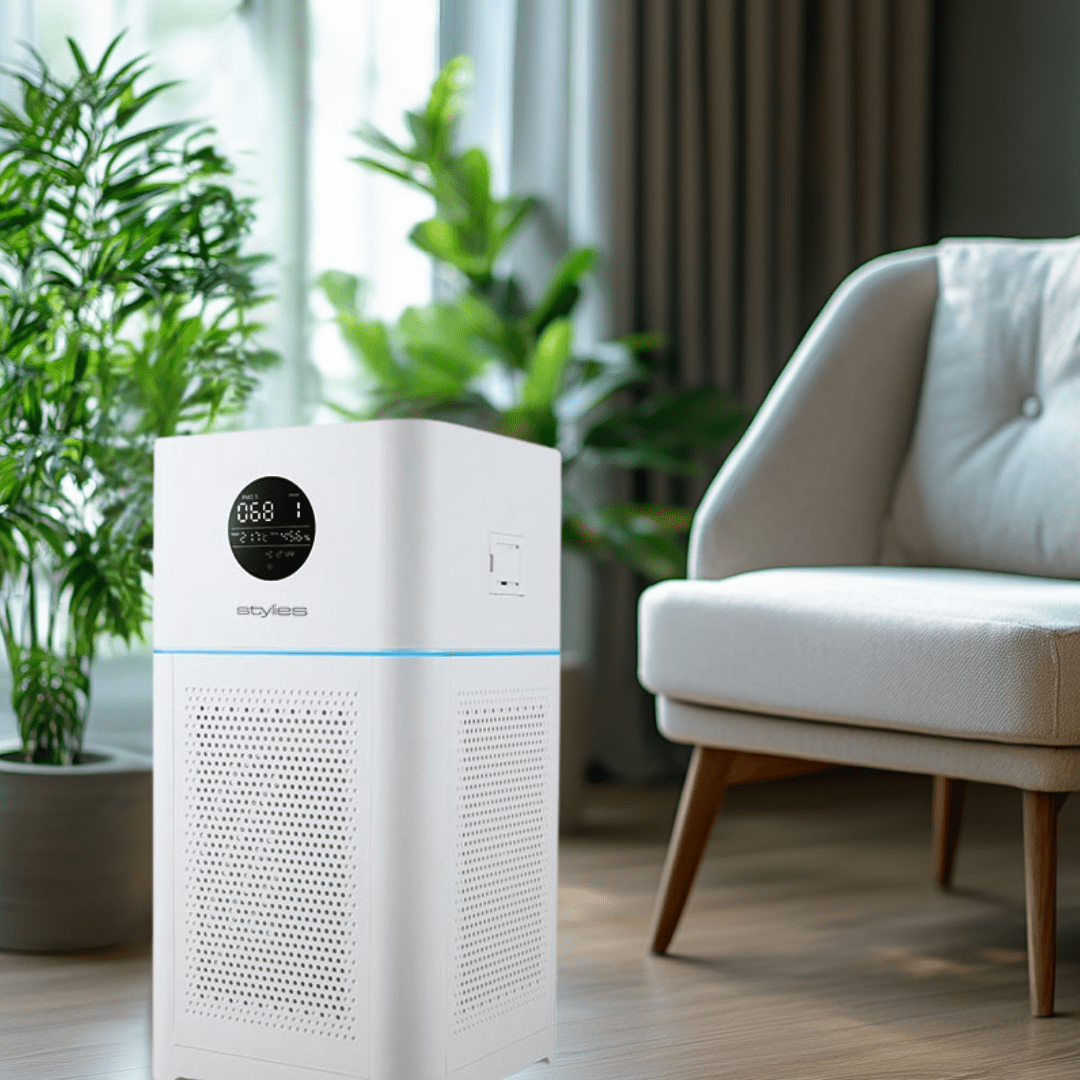
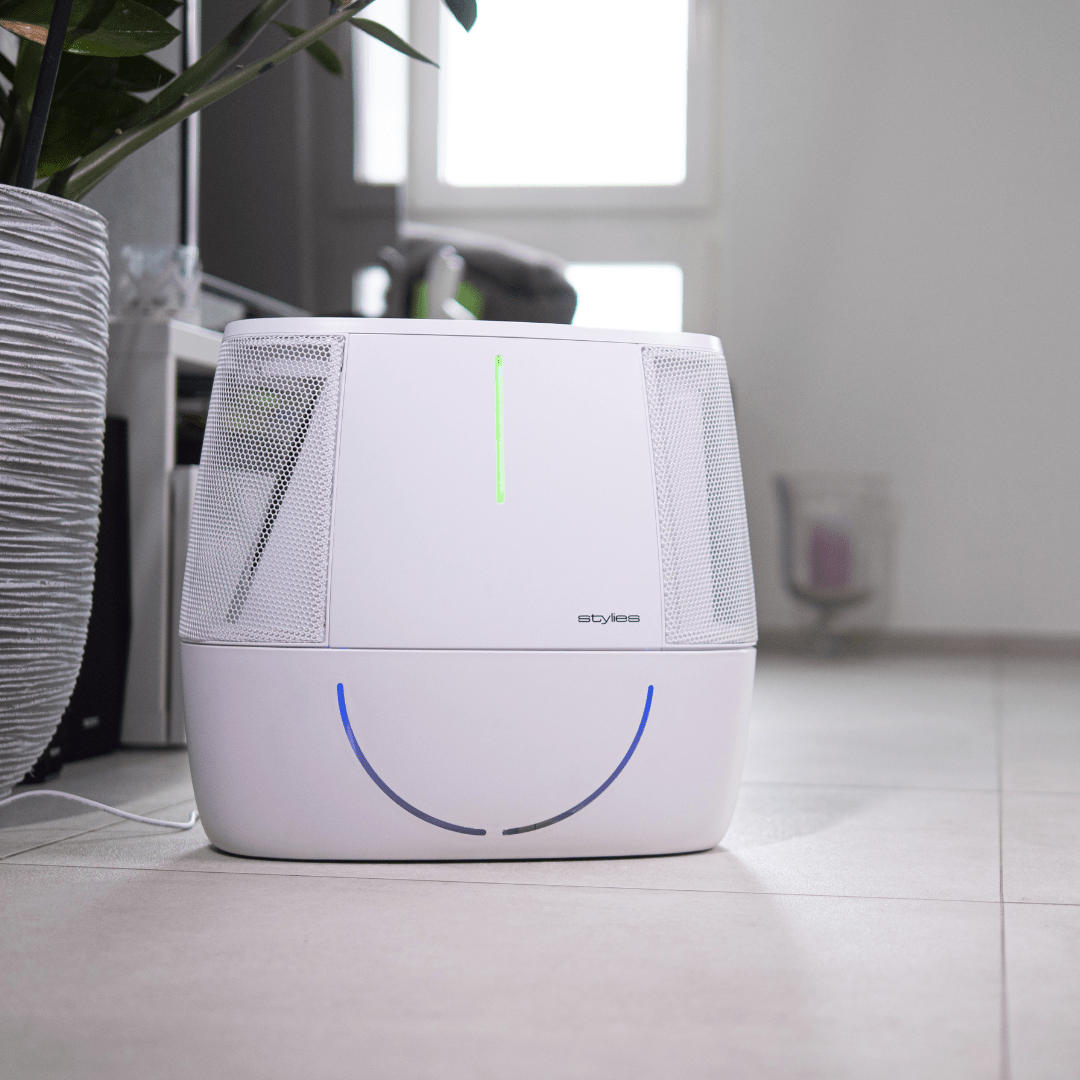
Heating is not just about technology, but also about atmosphere . Especially with Stylies heating appliances, the interplay of design, comfort, and functionality plays a central role.
Textiles as "invisible heating aids"
With the right furnishing choices, you can significantly increase your subjective feeling of warmth:
- Carpets on cold floors reduce the feeling of coldness on the feet.
- Curtains in front of windows (closed in the evening) create an additional layer of warmth.
- Pillows and blankets on the sofa and armchair give you a good feeling of security – and allow you to slightly lower the room temperature.
Order, structure and smart home support
A clearly structured home supports energy-saving behavior:
- Radiators are freely accessible and not obstructed.
- Thermostats are visible and easy to use.
- Smart home solutions can show you how temperature profiles develop throughout the day.
This way you combine aesthetic living with efficient heating – perfectly in line with a modern, stylish living concept.
Tips and information: Warm living, smart heating cost savings
How to save energy and money:
When you look at heating professionally, it's not about "maximum heat", but about optimal heat :
- adapted to room function and use
- tailored to the building's condition and year of construction
- supported by clever ventilation and sensible interior design
- with a focus on the temperature in the room
- Bleed the heating system regularly.
With the guideline values for the individual rooms, knowledge of common mistakes (permanent tilt position, blocked radiators, open roller shutters) and the legal guidelines, you now have a solid basis for making conscious decisions .
Heating correctly means: ensuring comfort, keeping costs under control, protecting buildings – and making a contribution to climate protection.
Expertise & Author
This article was created in collaboration with Stylies, the Swiss manufacturer of high-quality air conditioning units.
Daniel Gwerder , CDO of Tavora Brands AG, has been an expert in health and indoor climate for over 20 years and shares his knowledge in a well-founded, understandable and practical way.

👉 You can find out more about Daniel on LinkedIn
👉 Discover Stylies air conditioners on Stylies