
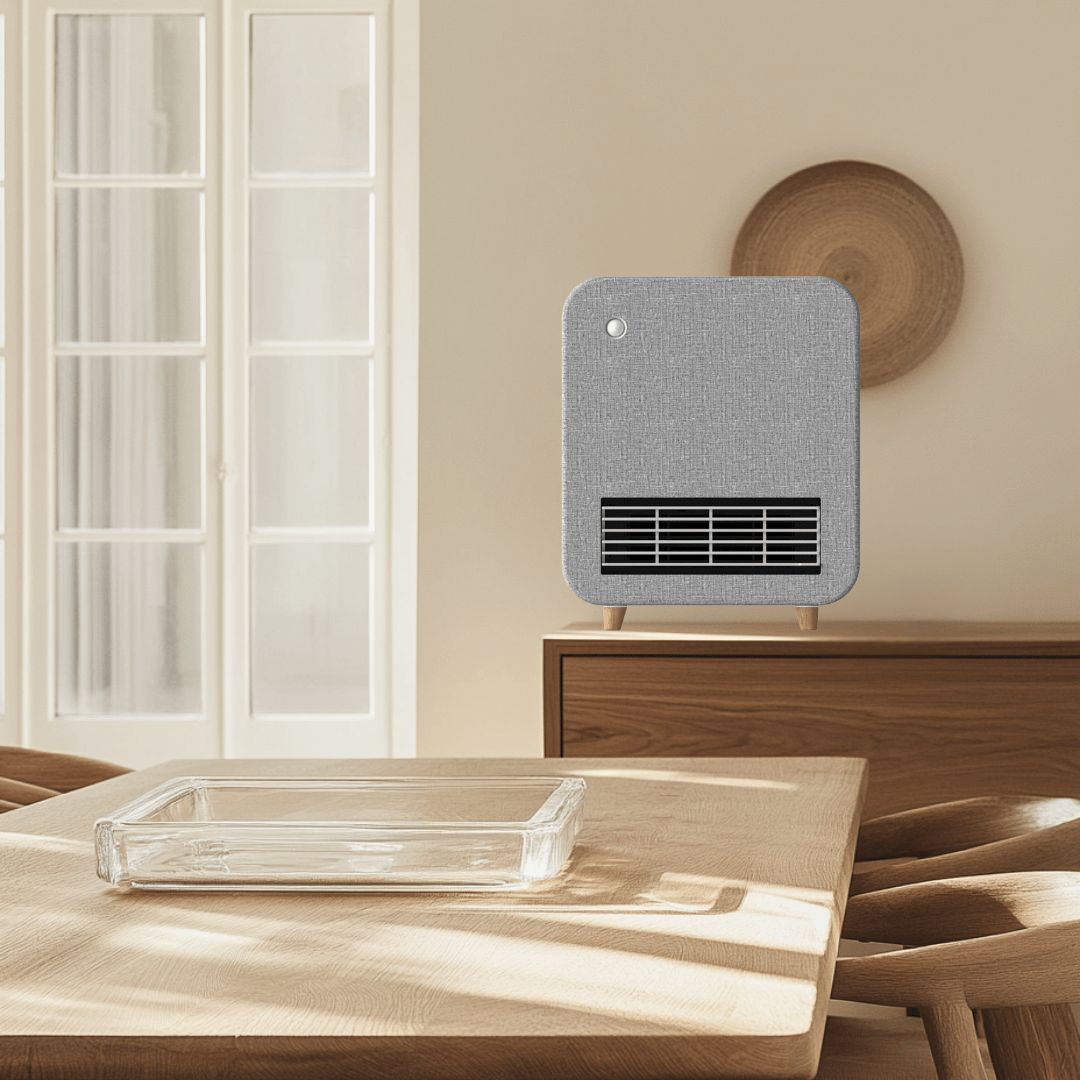


Smart heating during transitional periods
Heat exactly where you need it
Cool in the morning, sunny in the afternoon, chilly again in the evening: Especially during the transitional period, proper heating is not so easy.
Does the entire apartment therefore have to be heated continuously?
Not necessarily.
A much more crucial question is:
Where, when, and for how long do you actually need heat?
With the new Stylies PHOENIX, we usher in the cooler season – and show you how to heat consciously, comfortably, and according to your needs during the transitional period.
When summer ends, the difficult heating phase begins
In September and October, temperature differences within a single day can be significant. It's noticeably cool in the morning, the sun warms the apartment during the day, and the temperature drops again in the evening.
Precisely in this phase, we tend to either turn up the entire heating system too early or wait while shivering.
It's worth taking a closer look at individual rooms.
The Federal Office of Public Health recommends approximately 20 to 21 °C in living rooms and around 18 °C in bedrooms during the heating season. At the same time, humidity also plays an important role in creating a comfortable indoor climate.
The right temperature is not the same everywhere
Living rooms, bedrooms, or home offices are used differently. Therefore, they don't have to be kept at the same temperature permanently.
EnergieSchweiz provides the following typical guidelines:
-
around 20 °C in living and common areas
-
around 17 °C in bedrooms and hallways
-
around 23 °C in bathrooms
These values are guidelines. Personal thermal comfort remains individual.
The crucial point, therefore, is not to heat as much as possible.
But to heat as needed.
One degree more makes a difference
Those who are cold quickly turn up the thermostat a little.
But "just one more degree" can add up significantly over an entire heating season.
According to EnergieSchweiz, heating costs increase by approximately 6 to 10 percent with every additional degree of room temperature.
This doesn't mean you should freeze at home.
Rather, it means:
Heat should be generated where it provides comfort – and when it is actually needed.
This principle is particularly useful during the transitional period.
Heat on demand instead of continuous operation everywhere
Perhaps you sit in your home office for two hours in the morning.
Perhaps you want to read in the living room in the evening, while the rest of the apartment is already comfortably warm.
Or you arrive at a cooled-down holiday apartment on the weekend.
In such situations, a targeted supplementary heater can provide comfort without having to bring every room to the same temperature simultaneously.
However, proper classification is important here:
An electric ceramic heater is not a central heating system
Electric heating devices convert electricity directly into heat. EnergieSchweiz therefore points out that mobile electric heaters consume comparatively a lot of electricity in operation. They are not intended as an energy-efficient replacement for a central heating system or a heat pump.
Their strength lies in a different application:
temporarily limited, targeted supplementary heat.
And that's exactly what makes PHOENIX interesting.
PHOENIX – when warmth can also be home comfort
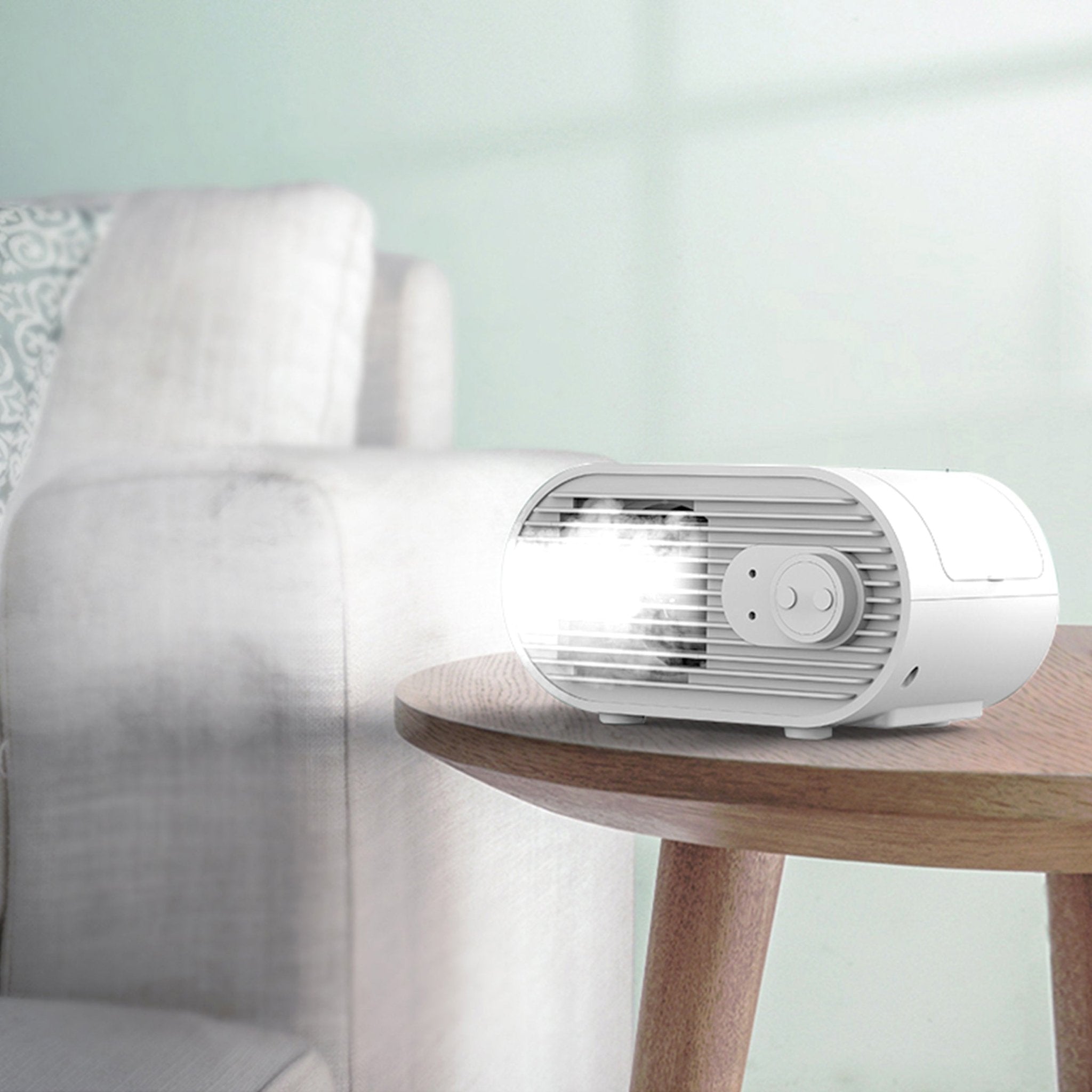
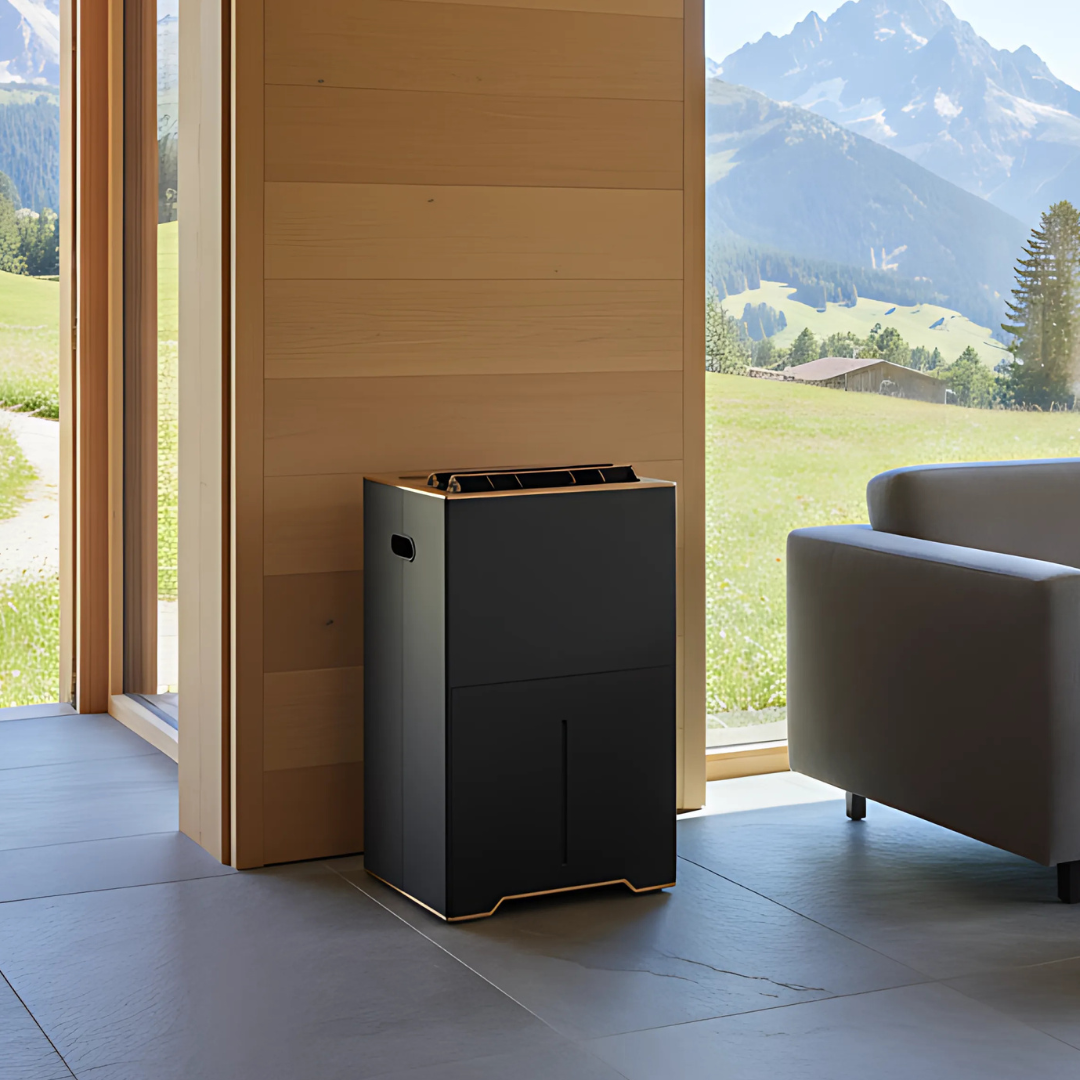
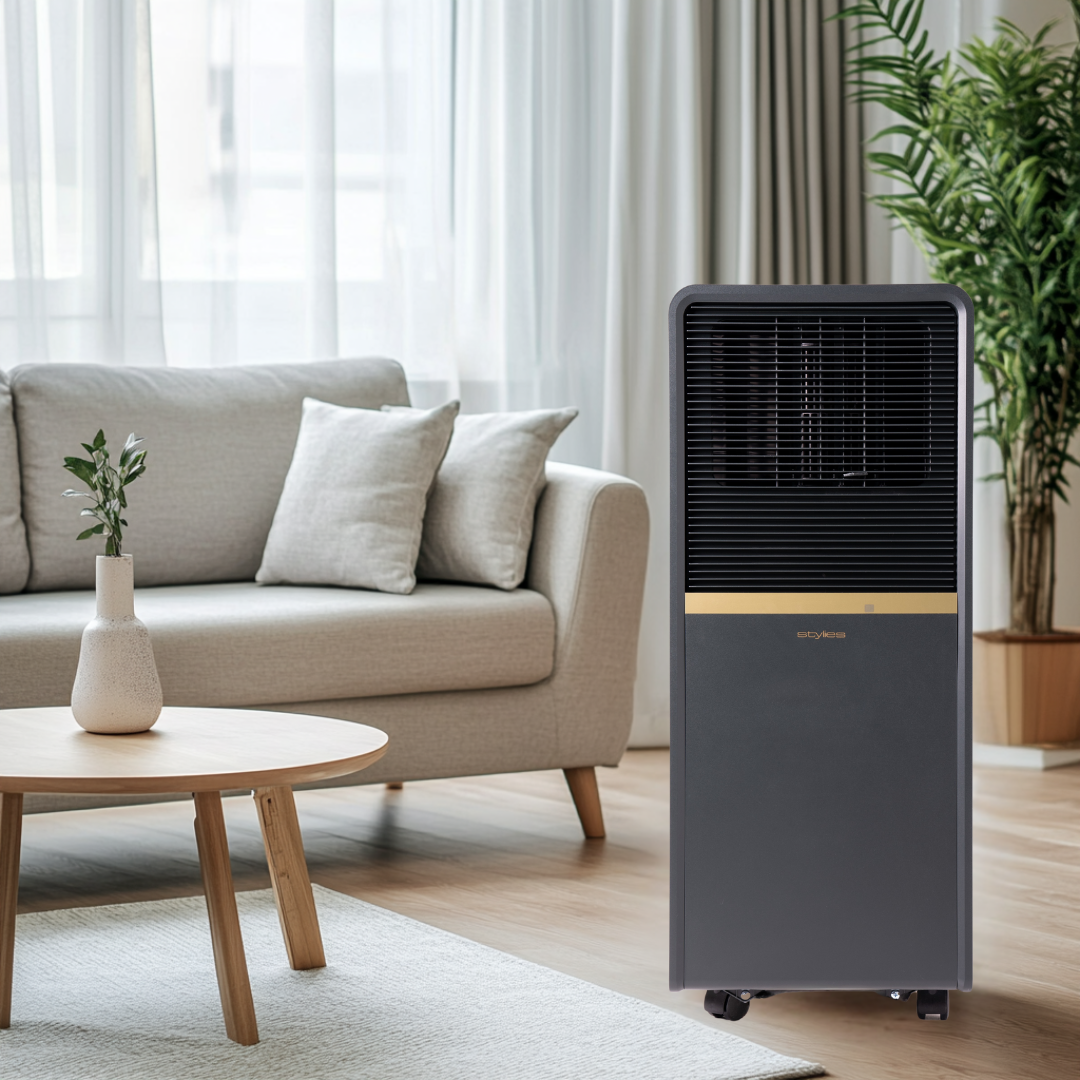
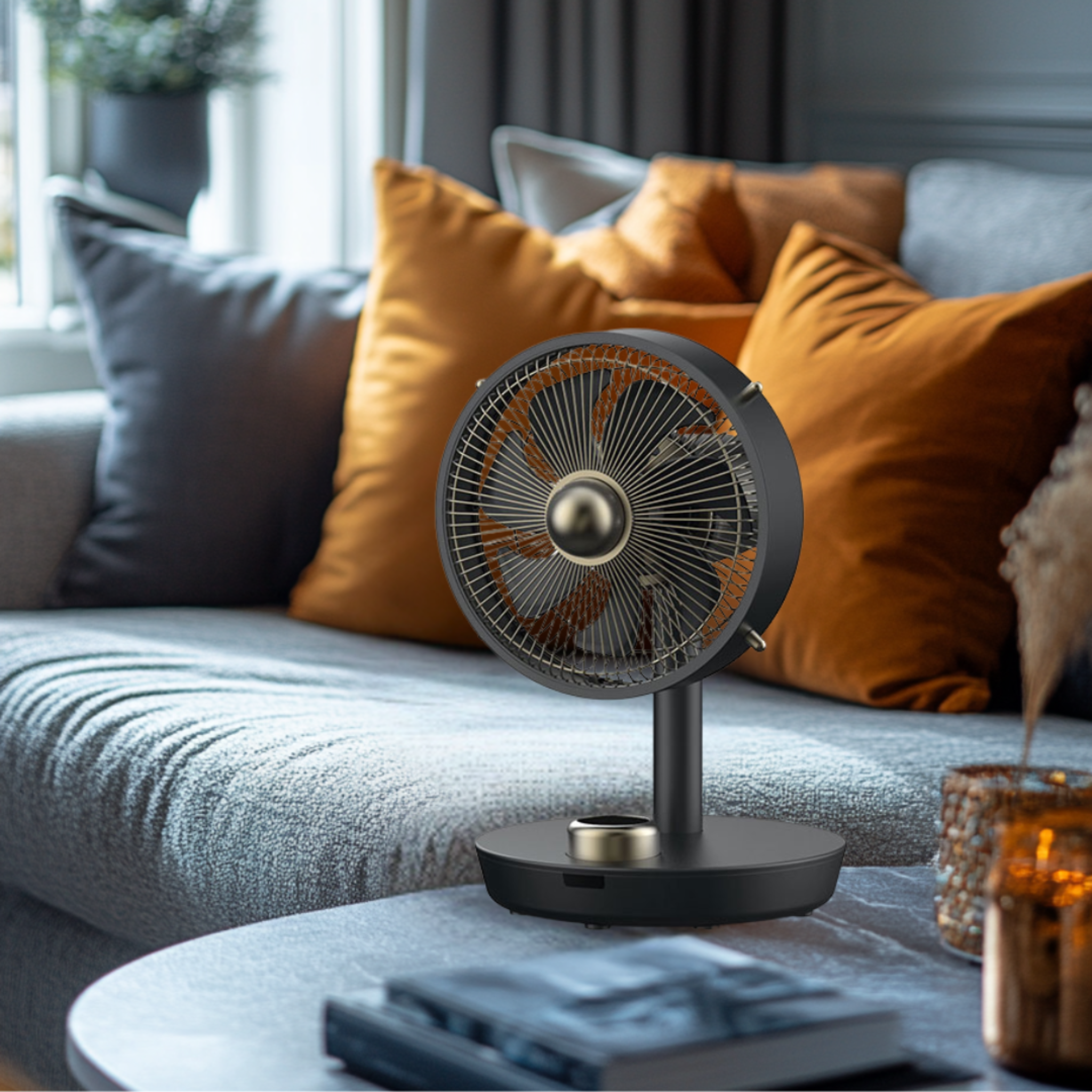
The Stylies PHOENIX is a ceramic heater for rooms up to 25 m² or 60 m³.
Its PTC heating element operates with two heating levels of 1300 or 2000 watts. The temperature control allows you to set a desired room temperature between 15 and 35 °C.
But PHOENIX is not just about producing as much heat as possible.
With its temperature-controlled Eco-mode, 80° oscillation, 24-hour and weekly timer, and remote control, its use can be consciously adapted to everyday life.
In addition, there is a detail that one would not necessarily expect from a heating device:
Light.
The fiery ambient light in the lower part of the PHOENIX creates a warm visual accent and transforms a functional heating device into a cozy element.
Especially on darker autumn and winter evenings, this creates not only warmth but also atmosphere.
5 situations where targeted supplementary heat can make sense
1. Home office in the morning
You work for several hours in one room while the rest of the apartment is barely used.
Instead of raising the temperature everywhere, you can specifically make the actually used room more comfortable.
2. Living room in the evening
After a mild autumn day, it suddenly gets cool in the evening.
Precisely then, temporary supplementary heat can be more pleasant than running the entire heating system harder for a few hours.
3. Guest room
Rooms that are only used sporadically do not have to be permanently kept at living room temperature.
If the guest room is needed, additional heating requirements can be specifically met.
4. Holiday apartment
Especially in apartments or holiday properties that are not permanently occupied, additional heating may be needed upon arrival.
A programmable heating period can provide additional comfort here.
5. The classic transitional period
Sun during the day, single-digit temperatures at night:
When the weather constantly changes between late summer and autumn, flexible heat is often more pleasant than a rigid heating routine.
Eco-mode and timer: Don't heat longer than necessary
A particularly interesting aspect of the PHOENIX is therefore not its maximum heating power.
It is its controllability.
The desired temperature can be used to define the indoor climate to be achieved. The temperature-controlled Eco-mode supports needs-based operation.
The integrated 24-hour and weekly timer additionally allows scheduling its use.
This can mean, for example:
-
Warmth in the morning around your home office hours
-
additional warmth in the evening
-
defined usage times on individual weekdays
-
no unnecessary continuous operation after leaving the room
Good heating doesn't start with maximum power, but with control.
What does 2000 watts mean for power consumption?
This also belongs to a responsible use of an electric heating device.
At a power consumption of 2000 watts, 60 minutes of continuous full load corresponds to an calculated 2 kWh of electricity. PHOENIX also has a 1300-watt level and a temperature-controlled regulation. The actual operating duration of the heating power therefore depends on usage, set temperature, room, and ambient temperature. The maximum power consumption of PHOENIX is 2000 watts.
This once again shows why electric supplementary heat is best used targeted and for a limited time.
PHOENIX is not meant to heat the house.
PHOENIX is meant to create comfort exactly where you want it.
Heating is only one part of the indoor climate
With the start of the heating season, not only the temperature in our living spaces changes.
The relative humidity can also decrease.
The Federal Office of Public Health recommends a relative humidity of approximately 30 to 50 percent for living rooms during the heating season. Heavily overheated rooms can additionally intensify the feeling of dry indoor air.
Therefore, here too:
Don't just heat as warmly as possible.
But consider temperature, humidity, and ventilation together.
Regular short ventilation, an appropriate room temperature, and humidity control together form the basis for a pleasant indoor climate.
This is exactly the philosophy behind Stylies:
A good indoor climate is no coincidence – it is the result of conscious decisions.
With PHOENIX, we start the cooler season
Autumn does not have to mean that the heating runs at full blast everywhere from the first cold morning.
A much more sensible question is:
Where do I need heat right now – and where not?
PHOENIX combines targeted supplementary heat with easy operation, temperature control, timer, oscillation, and a design that integrates consciously into modern living spaces.
With 1300 or 2000 watts, a temperature selection of 15 to 35 °C, and a recommended room size of up to 25 m² / 60 m³, PHOENIX is designed for targeted use in living and working spaces. Tilt and overheating protection provide additional safety.
The cool season can come.
Not with maximum heat everywhere.
But with heat exactly where you need it.
If you want to know how to heat like a pro, with a system instead of by feel, then the Deep Dive is exactly for you:
complete guide, clear tips, immediately actionable.

Expertise & Author
This article was created in collaboration with Stylies of Switzerland.
Daniel Gwerder, Salesbroker GmbH, has been working for over 20 years with topics such as health, indoor climate, trade, and customer benefits, communicating specialized knowledge in an understandable and practical way.